Invisible Killer: Carbon monoxide detector use urged
Shawn Linenberger
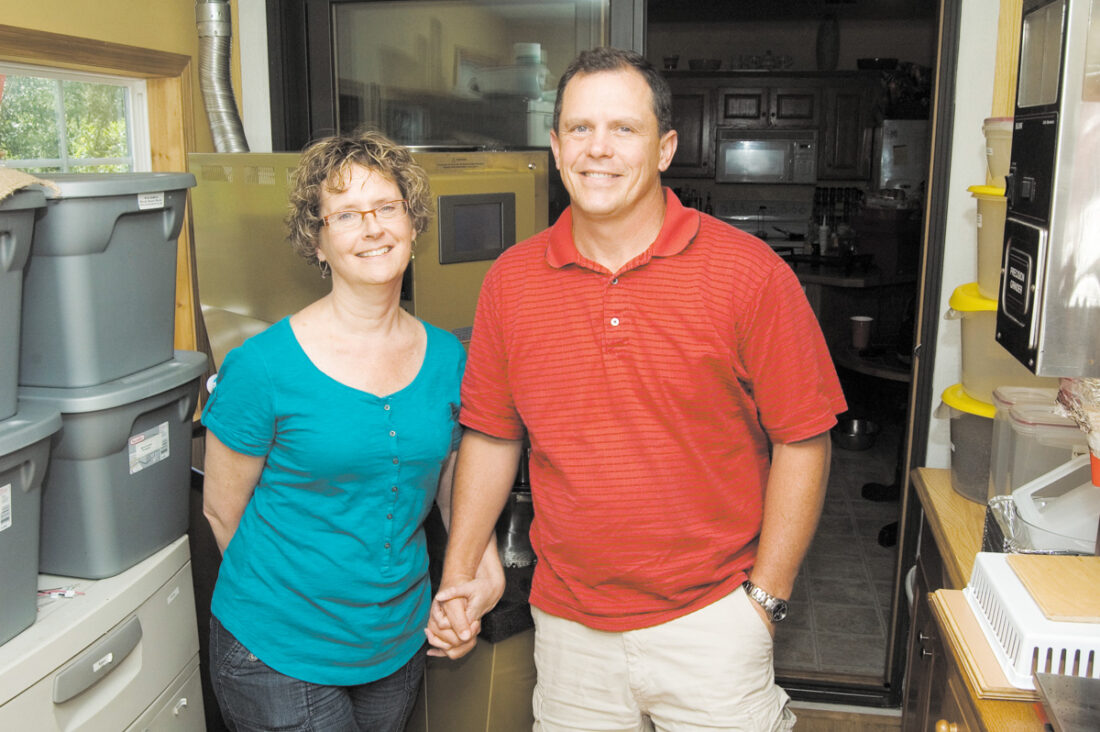
Val and Jamie Carlisle, Tonganoxie, stand near one of their coffee bean roasters. A faulty filter in a second roaster caused carbon monoxide emissions in their house, putting them at risk of death had they not called for medical assistance when they did.
Q: Why all the worry about carbon monoxide?
A: Carbon monoxide, or CO, is so dangerous because it is odorless, invisible and it can kill. CO can make a child seriously ill in small doses that might not noticeably affect an adult.
Q: What can cause carbon monoxide in the home?
A: Fuel-burning appliances. These appliances include ovens, space heaters, generators, indoor grills and fireplaces, and they can cause dangerous levels of carbon monoxide to build up in the home.
Q: Who is most vulnerable to carbon monoxide poisoning?
A: According to a study from 2004 to 2006, children younger than 5 years old have the highest estimated rate of CO-related visits to the emergency room each year among all age groups in the United States.
Q: What safety tips do you recommend to protect families from CO poisoning?
A: Prevent CO buildup in the first place — make sure heating appliances are in good working order and used only in well-ventilated areas.
• Don’t run a car engine in the garage, even to warm it up.
• Install a CO alarm outside every sleeping area, on every level of your home and at least 15 feet away from every fuel-burning appliance.
• Have all gas, oil or coal burning appliances inspected by a technician every year to ensure they’re working correctly and are properly ventilated.
Q: What should be done in case of a carbon monoxide leak?
A: If you suspect a leak, open windows to allow fresh air into the home. If someone who has been in a poorly ventilated room with a fuel-burning appliance exhibits symptoms including headache, dizziness, fatigue, nausea, vomiting or confusion, move the victim to fresh air and call 911.
-
- Val and Jamie Carlisle, Tonganoxie, stand near one of their coffee bean roasters. A faulty filter in a second roaster caused carbon monoxide emissions in their house, putting them at risk of death had they not called for medical assistance when they did.
Local

Lawrence High welcomes Team Algeria for World Cup

Tonganoxie candidate among those filing before deadline