Council defends discussions on possible street upgrades
Estuardo Garcia
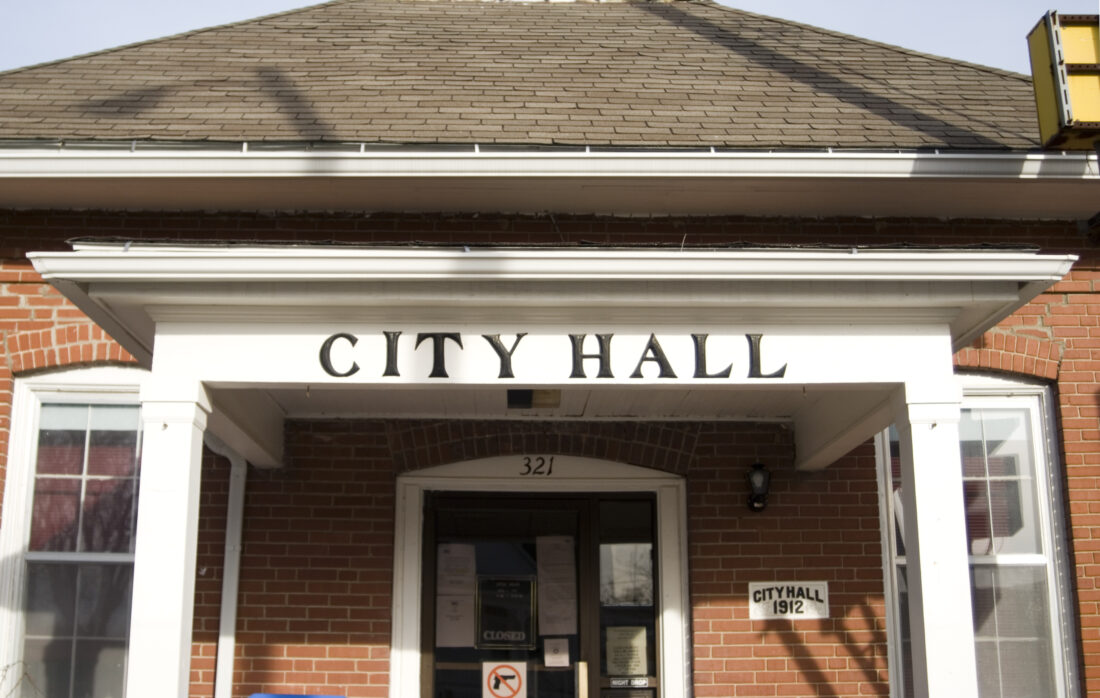
City of Tonganoxie elected officials and staff defended the council Monday against an alleged perception it didn’t support USD 464’s $26.9 million bond issue.
A dozen supporters of the bond issue attended Monday’s council meeting with two, John Morgan and USD 464 PTA President Chris Niemeyer, addressing the council during open session.
Both men spoke regarding recent stories in The Mirror about council discussions on street improvements needed should district voters approve the April 5 bond referendum. Last week, it was reported the consensus of the council was the school district should be responsible for any street upgrades needed with the construction of a new elementary school on the district’s 80-acre campus now home to Tonganoxie Middle School.
In addressing the council, the two men made the case for the bond projects — particularly the 400-student intermediate elementary school — while saying there was a perception the council didn’t support the bond issue.
Morgan — with the pro-bond group Quality for Kids, School Bond 2011 — noted the council has had several recent meetings on economic development. He supported those efforts as he said most in the city did, but he said schools were important in attracting new businesses and their employees. Future employees at Tonganoxie businesses could opt to live in neighboring Basehor and Bonner Springs, which are opening new schools, instead of sending children to attend school in mobile units in Tonganoxie, he argued.
With district growth of 17 percent since 2004 and a large number of pre-school children set to enter kindergarten in coming years, the contrast between the districts’ facilities would get more grim without new classrooms, Morgan said.
Moreover, Morgan said the question of who should pay for off-site improvements was answered, citing Kansas Department of Education deputy commissioner Dale Dennis as saying the school district couldn’t legally pay for any off-site improvements, through a bond issue or otherwise, and could be found to have misused funds if it did.
The council has expressed concern about incurring more debt, but Niemeyer said it should consider the debt it owed students to have a quality and safe educational environment. That was not the case when children played “Frogger” through traffic when dropped off or picked up from school, had remedial and gym classes in hallways or went to school in a storage hut or mobile units, he said.
The squeeze forcing those conditions was the elementary school’s 92-square-feet per student, which compared to the 125-square-foot national average and 182-square-foot state average, Niemeyer said.
From the economic development standpoint, the council should support the school district as the city’s largest employer, Niemeyer said. But, he said the perception in the community because of the council’s position on the district paying for street improvements was that it didn’t support the bond issue. That perception could be detrimental to the bond issue’s success, he said.
In response, Mayor Jason Ward reminded the bond supporters he pledged to do all he could for the bond issue at a December joint meeting with the school board.
Ward added that there has been mixed information on the school district’s ability to pay for off-site improvements. In light of Morgan’s information, that question needed to be answered, he said.
Ward also objected to any perception that the council opposed the bond issue. He characterized the council’s discussions of the possible street improvements as information gathering and policy-driven rather than political. At no time during those talks had any council member opposed the school bond, he said.
The council’s concern, as it should be with a price tag for 14th and East street improvements placed as high as $4.5 million — which is more than the city’s remaining $3.5 million debt ceiling — was with taxpayers, Ward said. The taxpayers’ burden would be lessened if the district, with its larger tax base, helped pay for the streets that would benefit all in the district, he said.
Councilman Chris Donnelly, too, objected to any suggestion the council didn’t support the bond issue. He said taxpayers would ultimately decide the issue and the city would do what was needed should the bond pass.
The council would be wise to keep its discussion on an objective policy basis, City Attorney Mike Kelly said. The council needed to be very cautious taking a position on a political issue and was forbidden from supporting any referendum with funding, he said.
City Administrator Mike Yanez said communication between city staff and the district’s administration was open and ongoing, he said. The council was exploring options, a task that would continue with the completion in early February of a traffic study on the consequences of a new elementary school near the middle school, which will provide insight on when and what street upgrades were needed.
“There’s still a whole lot of talking to be done,” Yanez said.
Ward and Councilmen Donnelly and Bill Peak said they welcomed input from the bond supporters and encouraged further dialogue.
In particular, Donnelly noted the expressed support of Morgan and Niemeyer for higher city taxes to pay for any street improvements, the first pro or con stance he had heard on the issue.
“That’s two; you’re ahead 2-0 right now,” he said. “I think it’s positive you come up here saying, ‘I want you to raise taxes.'”
Local

Lawrence High welcomes Team Algeria for World Cup

Tonganoxie candidate among those filing before deadline