
Operation WildLife urges caution during spring wildlife encounters
Micah Bray
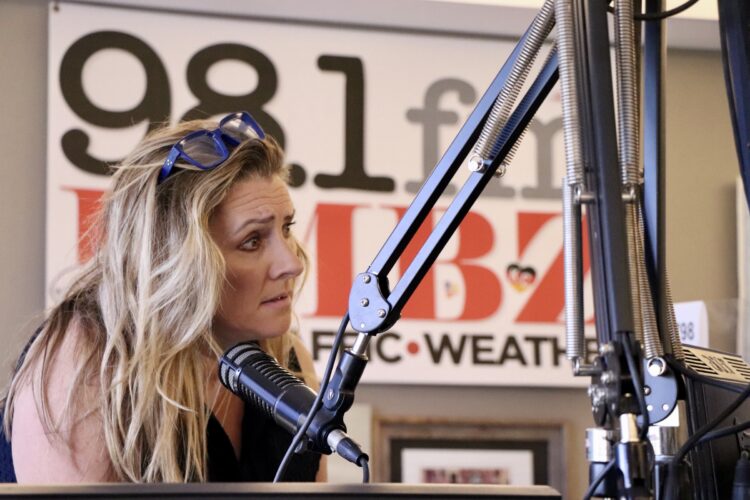
KMBZ host Dana Wright talks wildlife in studio during a recent segment with Operation WildLife director Diane Johnson and Micah Bray, public information officer for the Leavenworth County Attorney’s Office.Springtime wildlife encounters — and how the public should respond — were the focus of a recent segment on the “Dana & Parks” show on 98.1 FM KMBZ, where Operation WildLife Executive Director Diane Johnson joined Leavenworth County Attorney’s Office Public Information Officer Micah Bray in studio.
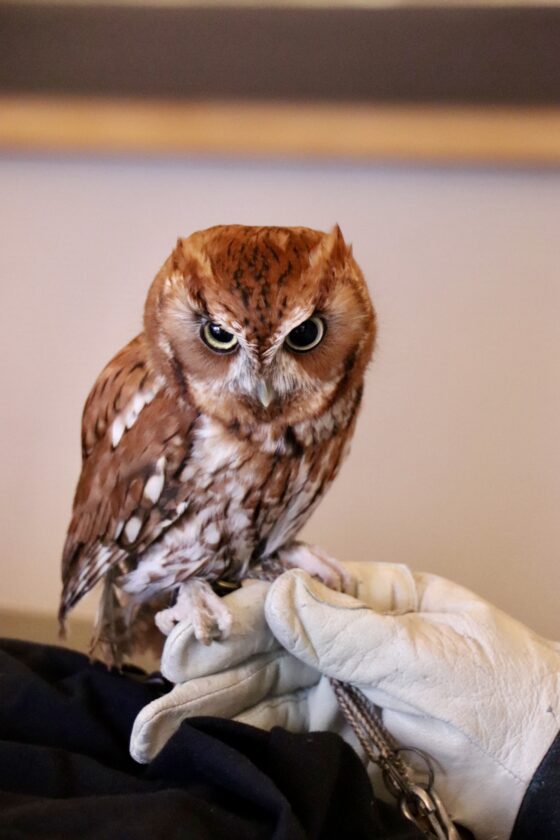
Johnson, who has served as executive director of Operation WildLife (OWL) for nearly four decades, brought along “Chief,” a pint-sized adult eastern screech owl that serves as one of the organization’s educational ambassador animals. Chief, a non-releasable adult owl, is among several raptors housed at OWL’s facility in Linwood that are used to educate the public about wildlife conservation.
The appearance highlighted OWL’s work during its busiest time of year, as spring brings an influx of young animals and more calls from the public.
Community support critical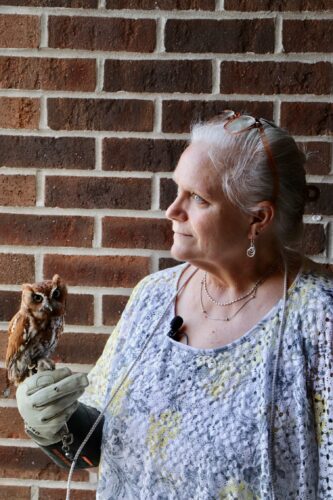
What to do if you find baby wildlife
A key message from the discussion: many animals that appear abandoned are not.
Johnson said one of the most common misconceptions is that young wildlife found alone have been deserted, when in many cases, parents are still actively caring for them.
Mother rabbits, for example, typically visit their nests only twice a day — early morning and late evening — to avoid attracting predators. As a result, baby rabbits are often mistakenly removed.
“If you haven’t seen (mother) rabbit, that doesn’t mean they’ve been abandoned,” Johnson said.
Similarly, young birds found on the ground are often learning to fly and should be left alone unless clearly injured. If a nest is reachable, younger birds can be safely returned.
Micah Bray
Chief hangs out in the KMBZ studio.
To help guide the public, OWL offers a “So you found a…” tool on its website. The resource allows users to select the type of animal they’ve encountered — such as rabbits, birds or squirrels — and follow step-by-step guidance on when to intervene and when to leave the animal alone.
Turtles and relocation risks
Johnson also addressed a lesser-known issue involving turtles, noting that relocation can be harmful.
Turtles should be returned to where they are found, or they may spend the rest of their lives trying to return to their original habitat. Even moving a turtle in the wrong direction across a road can disrupt its natural behavior.
Johnson said residents should never remove turtles from the wild to keep as pets.
“If people find a turtle that has been hit by a car, they need to make note of where they found that turtle,” she said. “Box turtles have to be rehomed within a mile of where they were originally found, otherwise they just wander for the rest of their life.”
Wildlife rehabilitation and limitations
Operation WildLife, based in Linwood, provides veterinary care and rehabilitation for injured and orphaned wildlife across northeast Kansas and the Kansas City metro. The organization has been serving the region since 1989 and treats thousands of animals each year, with release rates averaging about 69 percent — higher than the national average.
Many of the animals admitted to OWL are injured due to human-related causes such as vehicle strikes, domestic pets or habitat disruption.
Due to safety and resource limitations, the facility does not accept certain species, including adult skunks, venomous snakes and deer.
The organization, which is required to meet strict guidelines to keep wildlife, also houses non-releasable birds of prey, such as Chief, which serve as educational ambassadors to promote conservation awareness.
Community support critical
The Leavenworth County Attorney’s Office and Johnson’s visit emphasized the importance of public awareness and responsible decision-making when encountering wildlife.
OWL operates entirely on donations and volunteer support and does not receive city, state or federal funding.
“They are creatures,” Johnson said. “We were put on this earth. One of our jobs as people is to be good caretakers and stewards for our earth and the things that are in it. So, we have a responsibility to take care of them and give them a second chance.”
For more information, wildlife guidance or to learn how to help, visit Operation Wildlife’s website at www.owl-online.org.
Local

Remember When: A Community Review of Tonganoxie for Oct. 7, 2026

Library Corner: Costume exchange; Family movie night; Hubbel Hill walking tour
